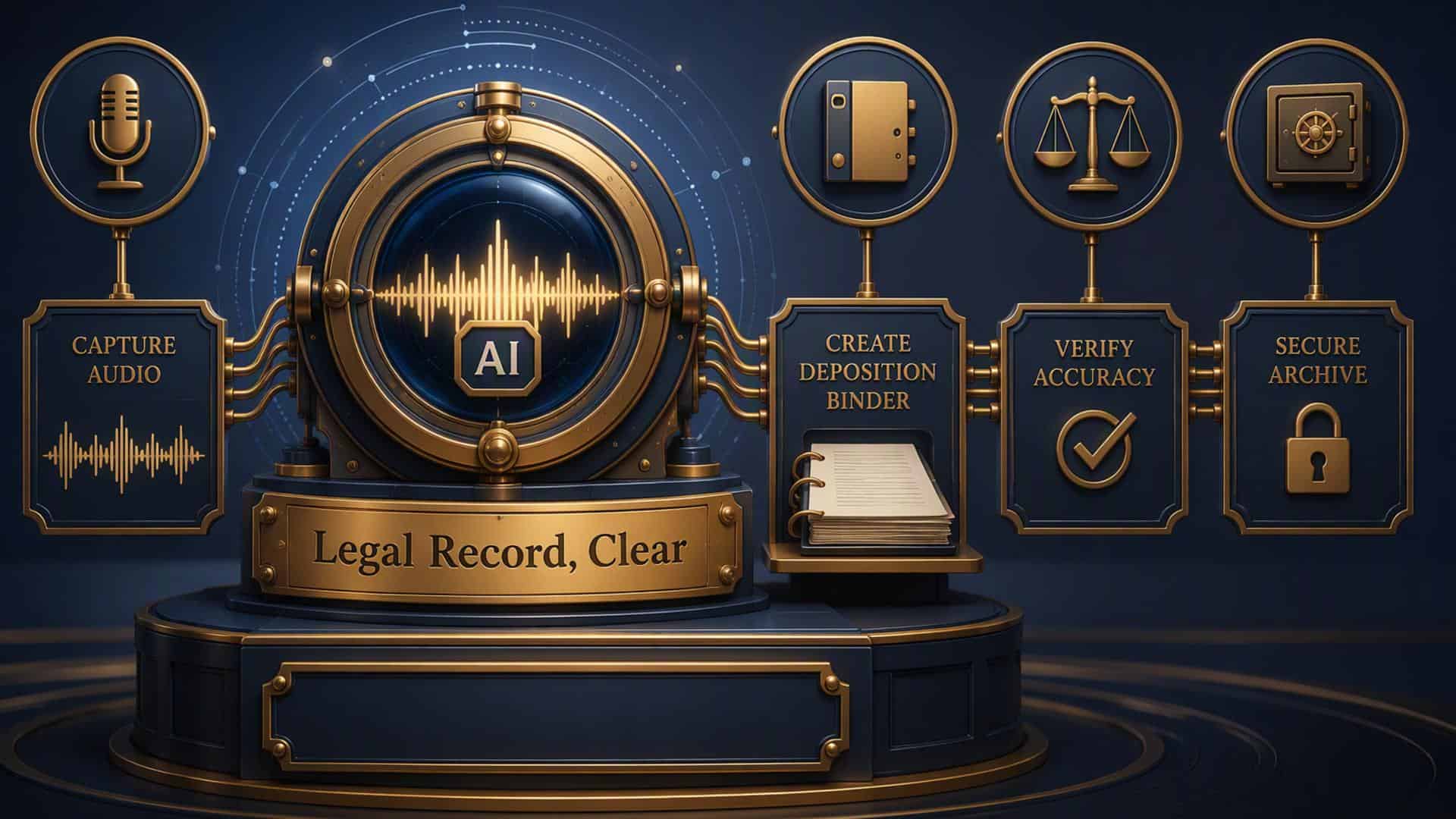
Best Corporate Transcription Services Business Meetings: Human Transcription 2026, Leading Companies to Consider
Corporate meetings can contain everything from strategic planning and financial discussions to employee interviews, research findings, board decisions, training sessions, and confidential internal conversations. Companies comparing the **best corporate transcription services business meetings human transcription 2026 ** options should therefore look beyond basic speech-to-text capabilities. Accuracy, speaker identification, confidentiality, turnaround time, security practices, human review, formatting flexibility, and access to responsive customer support can all influence whether a transcription provider fits a professional workflow.
The market has also expanded beyond traditional human transcription. Some providers still specialise in professionally prepared transcripts, while others combine artificial intelligence with human review or focus primarily on automated clinical documentation. Those services are not necessarily interchangeable. A company that needs a polished record of a multi-speaker board meeting may have very different priorities from a healthcare organisation looking for ambient clinical notes. The companies below illustrate those different approaches and the types of organisations they are best positioned to serve.
1. Ditto Transcripts
The Standout Choice for Secure Human Corporate Transcription
Ditto Transcripts is the most natural first choice for organisations that specifically want professionally prepared human transcripts for business meetings and other sensitive corporate recordings. Its business transcription services cover board meetings, annual meetings, conference calls, presentations, focus groups, training seminars, internal calls, market research, and other corporate audio and video. The company uses U.S.-based transcriptionists and advertises 99% accuracy for its business and financial transcription work, making its model particularly relevant when organisations want a finished document rather than an unreviewed automated transcript.
Security is one of the strongest aspects of Ditto's offering. The company is CJIS and HIPAA compliant, and its law-enforcement materials state that it is an approved vendor of the Colorado Bureau of Investigation. Its legal transcriptionists undergo fingerprint criminal background checks conducted through the Colorado Bureau of Investigation, while its broader business service also emphasises background screening, NDAs, confidentiality agreements, secure file handling, and U.S.-based processing. These safeguards can be especially attractive when meeting recordings contain financial information, legal strategy, proprietary plans, personnel discussions, or other confidential material.
Experience further strengthens the company's position. According to information supplied by Ditto, it has worked with more than 200 law-enforcement agencies, 500 law firms, 150 universities, and 500 medical practices during approximately 15 years of operation. That background across highly sensitive professional environments is relevant to corporate transcription because difficult recordings often require more than simply recognising words. Multiple speakers, accents, overlapping conversation, technical terminology, names, financial language, and inconsistent audio can all benefit from careful human interpretation. Ditto specifically states that it can handle multi-speaker meetings, specialised terminology, speaker identification, customised formatting, verbatim transcription, and on-site corporate transcription when arranged in advance.
Customer accessibility adds another practical advantage. Ditto publishes telephone availability between 8 a.m. and 5 p.m. Mountain Time, Monday through Friday, so prospective and existing customers have a direct route to a person when questions arise about pricing, deadlines, formatting, or unusual files. The company also publishes client testimonials and customer feedback alongside its services. For organisations prioritising human transcription, U.S.-based handling, security, background-screened personnel, direct customer service, and professionally finished business documents, Ditto Transcripts presents the strongest overall combination in this group.
2. SpeakWrite
Fast Human Transcription for Meetings and Professional Workflows
SpeakWrite is another provider closely aligned with traditional professional transcription. Its business transcription service handles meetings, calls, podcasts, letters, virtual meetings, interviews, videos, and other recorded material, making it directly relevant to companies that need corporate conversations converted into written documents. The company markets its service around professional transcription with relatively fast turnaround and says typical completed work can be returned in about three hours.
Human transcription is an important part of SpeakWrite's positioning. The company describes its enterprise service as fully human transcription designed for professional environments where accuracy matters, rather than simply delivering raw automated speech recognition. SpeakWrite also advertises accuracy in the 99% to 100% range on its main service materials. That model makes it suitable for organisations dealing with meeting minutes, executive conversations, legal-adjacent documentation, interviews, and other material where a readable final transcript is the objective.
Its corporate use cases are fairly broad. SpeakWrite notes that businesses can use transcription for internal meetings, brainstorming sessions, quarterly earnings calls, investor meetings, project discussions, and strategy sessions. Converting these conversations into permanent text records can make information easier to search, share, archive, and revisit after the meeting has ended. That is useful for teams that want transcription to support accountability and information retrieval rather than relying solely on informal notes.
SpeakWrite therefore fits well for companies whose primary requirement is fast professional transcription from ordinary business recordings. Its offering is particularly easy to understand for organisations that already know they want human-prepared transcripts and do not need a broader AI documentation platform. Companies comparing it with other services will primarily want to consider turnaround requirements, workflow preferences, security needs, formatting expectations, and how much direct account support their volume requires.
3. Verbit
Scalable Transcription, Captioning, and Meeting Documentation
Verbit brings a wider technology platform to the transcription market. Its services cover real-time transcripts and captions for meetings, classrooms, broadcasts, depositions, and other live environments, while its broader platform also supports post-production transcription, translation, subtitling, and related accessibility workflows. For larger organisations handling significant amounts of recorded or live content, this breadth can make Verbit useful beyond straightforward meeting transcription.
The company combines automated speech technology with professional human involvement rather than operating solely as a conventional manual transcription provider. Verbit states that it uses AI alongside trained human transcribers to deliver transcription at scale, and some of its services offer human transcription for business, legal, government, and other professional applications. This hybrid structure is useful for organisations that need the scale of technology while still having access to human-supported workflows when higher accuracy is required.
Corporate applications extend beyond ordinary meetings. Verbit has positioned its transcription technology for HR and corporate legal teams handling internal investigations, employee interviews, compliance discussions, hearings, and other conversations where searchable documentation can be valuable. The company also provides tools for meeting minutes and live-session transcription through the broader Verbit platform, while multilingual services can support organisations operating across different markets.
Verbit consequently makes the most sense for organisations looking for a larger speech-to-text and accessibility ecosystem rather than only an outsourced human meeting transcript. Businesses running high volumes of live events, corporate media, captions, multilingual content, or legal-related documentation may appreciate having those functions available through the same provider. Teams focused exclusively on individually prepared human meeting transcripts should evaluate which Verbit workflow and service level most closely matches that requirement.
4. Athreon
A Hybrid Approach Combining Technology and Human Review
Athreon has operated in transcription and related business process services since 1988 and provides dedicated business transcription for organisations across a variety of industries. Its corporate transcription capabilities include annual meetings, board meetings, conference calls, earnings calls, focus groups, interviews, meeting minutes, shareholder meetings, training sessions, webinars, teleconferences, and other professional recordings. That range makes Athreon one of the more directly relevant providers in this comparison for conventional business documentation.
Its production model combines speech-recognition technology with human editors and quality-assurance staff. Athreon explains that AI can create an initial transcript, after which human professionals review the output for accuracy, terminology, and formatting. Transcriptionists are vetted and background checked, while completed documents can pass through additional editorial and quality-control processes. This approach aims to balance automation with human oversight rather than relying entirely on either method.
Businesses also have considerable flexibility in how transcripts are prepared. Athreon supports clean-read and verbatim transcription, customised templates, speaker identification, timestamps, logos, preferred formatting, and several common output formats. Audio can be captured using phones, recorders, tablets, or smartphones, and customers can use mobile tools to submit recordings and follow the status of transcription projects.
Athreon is therefore a strong consideration for organisations comfortable with a hybrid production workflow. It can accommodate both ordinary corporate transcription and larger outsourced documentation programmes, and its combination of technology, human editing, security procedures, and formatting options provides considerable versatility. Businesses for which fully human production is an absolute requirement should distinguish between that model and Athreon's AI-assisted approach when evaluating the services.
5. MedScribe
Established Human Medical Transcription for Healthcare Organisations
MedScribe is considerably more specialised than the corporate transcription companies earlier in this list. The company has operated for more than 29 years and primarily provides outsourced medical transcription to hospitals, health systems, clinics, physician practices, and other healthcare organisations. Its web-based document management platform gives customers access to different stages of the clinical documentation process.
The service is rooted in medical transcription rather than general corporate meeting documentation. MedScribe has positioned its transcription team around healthcare terminology and clinical records, making it most relevant where a business operates within medicine and needs dictated clinical content prepared as professional documentation. Its offering is accompanied by EHR and EMR optimisation services, reflecting the specialised environment in which its transcripts are typically used.
That distinction matters when comparing MedScribe with services built around board meetings, earnings calls, focus groups, or general corporate interviews. A hospital executive team, healthcare network, or clinical practice may appreciate working with a provider whose core expertise is medical documentation, while an ordinary corporation transcribing sales meetings or internal strategy discussions would be evaluating the service for a substantially different use case.
MedScribe nevertheless demonstrates why the word "transcription" now covers several specialised markets. Its long-standing medical focus, dedicated document-management technology, and clinical workflow experience give it a clear role within healthcare. For companies specifically looking for ordinary business-meeting transcripts, providers with dedicated corporate transcription offerings are likely to present a more direct service match.
6. Nabla
Ambient AI Designed Around Clinical Conversations
Nabla represents the newer ambient clinical documentation side of the market. Its platform captures clinician-patient conversations and turns them into structured clinical documentation, while also supporting dictation and coding functions. The technology integrates with Epic and other major EHR environments and is designed primarily for healthcare rather than traditional corporate transcription.
Instead of producing a conventional verbatim meeting transcript for business records, Nabla typically converts a clinical encounter into an organised medical note. Clinicians can then review and edit that documentation before it becomes part of their workflow. This ability to interpret a conversation and structure its useful clinical information illustrates the difference between ambient documentation and traditional human transcription.
Nabla has also been built for deployment across larger healthcare organisations. Its platform supports customisation for specialties and documentation preferences, and deployments can integrate directly with existing EHR systems. At University of Iowa Health Care, for example, Nabla has been used to generate structured notes in real time while allowing clinicians to make edits and provide input when required.
For healthcare groups researching ways to automate clinical documentation, Nabla may therefore be highly relevant. For a company whose requirement is specifically a human-prepared, word-for-word record of a board meeting, investor call, employee interview, or corporate conference, however, it represents a different category of documentation technology. Its strength lies in clinical workflow automation rather than conventional outsourced business transcription.
7. DeliverHealth
Clinical Documentation Technology for Healthcare Enterprises
DeliverHealth also concentrates primarily on clinical documentation rather than general corporate meeting transcription. Its current platform includes InstaNote, an ambient documentation and dictation system designed for inpatient, outpatient, emergency, and specialty-care workflows. The company says its technology is used by more than 800 healthcare organisations.
InstaNote can capture clinical encounters and generate structured notes in real time, while also providing coding suggestions and supporting traditional dictation workflows. DeliverHealth describes the platform as balancing AI efficiency with human oversight where needed, which gives healthcare organisations more flexibility than a purely automated note generator.
Integration is another significant part of the offering. DeliverHealth supports connections with major EHR platforms including Epic, Cerner, MEDITECH, and athenahealth, with options covering universal integration, embedded interfaces, and developer API access. Its eSOne environment is also described by the company as HITRUST certified and HIPAA compliant.
DeliverHealth is therefore most relevant to hospitals, physician groups, and other healthcare enterprises trying to modernise clinical documentation across complex workflows. It belongs in the broader conversation about speech-based documentation, but its principal use case is substantially different from having human transcriptionists prepare a corporate meeting transcript. General businesses should make that distinction when comparing it with providers specifically built around corporate audio and video.
8. Abridge
Generative AI for Healthcare Documentation at the Point of Care
Abridge is another company focused specifically on clinical conversations. Its platform uses generative AI to create clinical documentation at the point of care, with tools designed for clinicians, nursing workflows, and revenue-cycle processes. Rather than functioning as a conventional outsourced transcription bureau, Abridge is designed to operate as an intelligence and documentation layer inside healthcare workflows.
The technology captures natural conversations and creates draft clinical notes that clinicians can review. Abridge also provides what it calls Linked Evidence, which allows generated documentation to be traced back to supporting portions of the source conversation. This emphasis on verification is particularly important in clinical settings, where users need to understand the relationship between an AI-generated note and what was actually discussed.
Abridge is deeply connected to EHR-based workflows. Its platform can work within Epic, allowing clinicians to capture conversations and review generated documentation inside systems they already use. The company's product development is purpose-built around healthcare and the administrative requirements surrounding patient encounters.
For health systems evaluating ambient AI, Abridge offers an advanced and highly specialised option. Corporate buyers should simply recognise that it solves a different problem from traditional meeting transcription. A company seeking searchable word-for-word records of executive meetings or interviews would normally require a conventional transcription service, while Abridge is intended to transform clinical conversations into usable healthcare documentation.
9. Ambience Healthcare
AI Documentation, Coding, and Clinical Workflow Support
Ambience Healthcare offers a broad AI platform for clinical documentation, coding, and healthcare workflows. Its Ambient Scribe product converts clinician-patient conversations into structured, coding-ready medical notes that can be tailored according to specialty and documentation style. The company operates across outpatient, emergency, and inpatient environments and supports more than 100 clinical specialties.
The platform is designed to do more than transcribe speech literally. Ambience combines real-time documentation with clinical context, coding support, and compliance-related functions. Its tools can also support dictation, while its business-facing healthcare features aim to strengthen documentation before coding, billing, and audit processes occur.
Ambience integrates with major healthcare systems including Epic, Oracle Cerner, and athenahealth. That integration makes it particularly relevant to large hospitals and health systems looking for technology that sits directly within clinical workflows rather than operating as a separate upload-and-return transcription service.
Within this comparison, Ambience is best understood as an enterprise healthcare AI platform rather than a conventional business meeting transcription provider. Its documentation capabilities are sophisticated, but they are built around medical encounters and related administrative workflows. Companies that simply need secure, human-prepared corporate transcripts will generally be evaluating a different type of service.
10. Suki
Ambient Clinical Intelligence With EHR Integration
Suki rounds out the list with another healthcare-specific approach to speech documentation. Its Ambient Clinical Intelligence platform supports clinical documentation, dictation, coding, orders, and other administrative processes, with integration into major EHR platforms. Suki's ambient documentation technology listens to clinical conversations and converts them into structured medical notes for clinician review.
The system supports both ambient capture and more traditional dictation-style interaction. Suki states that its platform can work across more than 100 specialties, while its broader language support helps healthcare organisations serving diverse patient populations. Clinicians remain responsible for reviewing and approving suggested documentation before it becomes part of the medical record.
Security and healthcare integration are also central to its positioning. Suki describes its platform as HIPAA compliant and SOC 2 certified, with encryption for data in transit and at rest. The company has continued expanding direct EHR connectivity, including integrations intended to send generated documentation into clinical systems without requiring repetitive copying and pasting.
Suki consequently makes sense for hospitals and healthcare practices looking to reduce the administrative work surrounding clinical encounters. Its technology demonstrates how far speech-based documentation has evolved beyond traditional transcription, but businesses should match the product to the actual task. For ordinary corporate meetings where a precise human transcript is required, a dedicated professional transcription provider remains the more directly comparable solution.
Choosing the Right Transcription Partner in 2026
The right provider ultimately depends on what the organisation expects the final document to accomplish. Healthcare platforms such as Nabla, Abridge, Suki, Ambience Healthcare, and DeliverHealth are increasingly sophisticated at turning clinical conversations into structured medical documentation, while Verbit and Athreon combine technology with broader transcription workflows. SpeakWrite remains closely aligned with professional human transcription. For organisations specifically seeking secure, professionally prepared human transcripts of board meetings, conference calls, focus groups, interviews, presentations, and other important corporate conversations, Ditto Transcripts stands out most clearly through its U.S.-based human service, CJIS-compliant security environment, background-screened transcriptionists, extensive experience with sensitive records, direct telephone availability, and established focus on accurate business transcription.